Iran-Iraq War: Is History's "Last Conventional War" Repeating?
The Middle East, a region perpetually at the geopolitical crossroads, often forces us to confront uncomfortable questions about the past echoing in the present. One such question is whether the harrowing lessons of the Iran-Iraq War, a conflict often dubbed the "last conventional war," are dangerously relevant today. As Iran demonstrates evolving military capabilities and a willingness to project power, the specter of history repeating itself, albeit in modern forms, looms large.
The Brutality of the Iran-Iraq War: A Forgotten Conventional Conflict
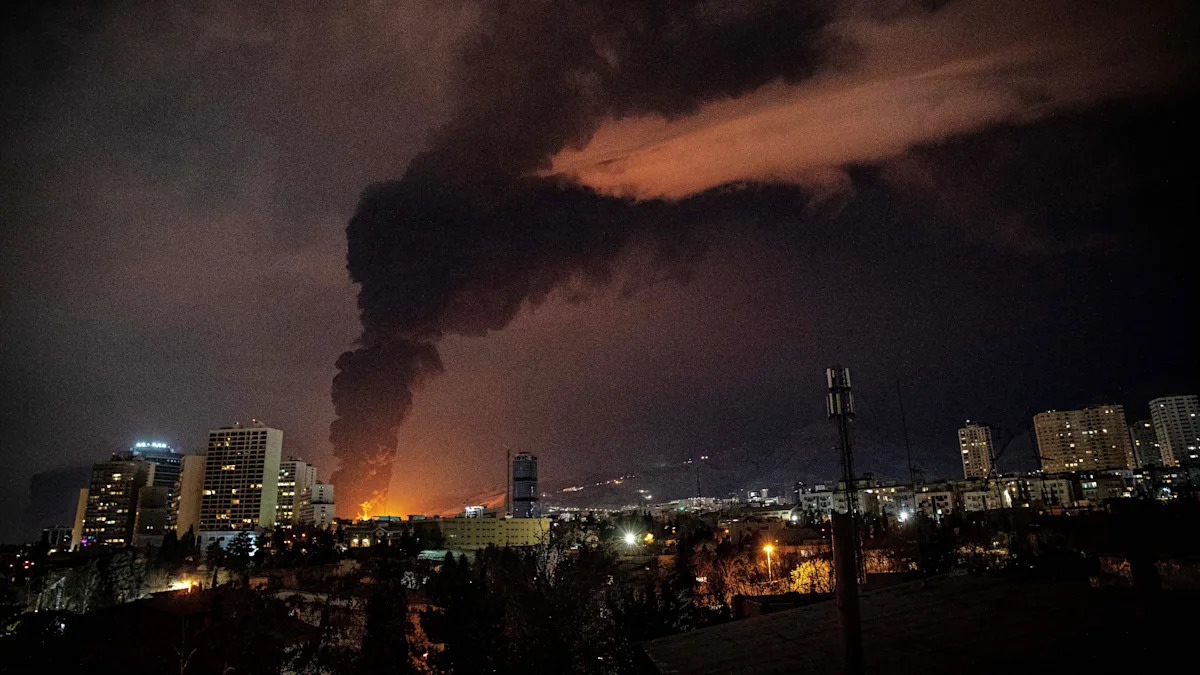
For eight long years, from 1980 to 1988, Iran and Iraq were locked in a devastating struggle that showcased the sheer brutality of state-on-state conventional warfare. Western contractors residing in Iraq during that era recounted chilling nightly spectacles: horizons scorched by relentless artillery fire and explosions, followed by the ominous, chest-rattling rumble of battle. Mornings would reveal a somber procession of civilian vehicles, coffins strapped to their roofs, carrying the newly fallen home. This cycle of violence and mourning was an everyday reality.
Despite its staggering scale and human cost—estimates range from one to two million casualties—the Iran-Iraq War remains curiously sidelined in Western military consciousness. Sandwiched between the widely recognized Vietnam War and the subsequent Gulf War, it often fails to command the attention its unique characteristics demand. Yet, this conflict was a crucible of World War II-style armor, artillery, and infantry battles, intensified by the horrific use of chemical weapons, burning cities, and blazing oil tankers. Many historians consider it the definitive example of conventional warfare: a large-scale conflict fought primarily between nation-states, employing traditional military assets like small arms, tanks, aircraft, and warships, with the primary aim of destroying the opposing army's operational capacity.
Understanding this conflict is crucial because some strategists posit it as not only the last conventional war to date but potentially the last ever, given the shift towards irregular and hybrid warfare. However, this bold claim necessitates a closer look at contemporary regional dynamics and Iran's current military posture.
Iran's Evolving Military Posture: Echoes of Confidence
Fast forward to today, and Iran’s military rhetoric reveals a nation increasingly confident in its capabilities. Mohammad Shirazi, the head of Supreme Leader Ali Khamenei's military office, recently lauded Iran's ability to "confidently carry out similar operations and showcase our capabilities to the world." He specifically referenced the April aerial assault on Israel, a coordinated barrage of approximately 350 drones, rockets, and missiles. While around 99% of this onslaught was intercepted by Israel and a US-led coalition, the operation remains a significant point of national pride for Iran, viewed as a successful demonstration of its reach and technological advancement.
Shirazi's boasts extend beyond regional projections, claiming that "major powers are extending their hands to us to meet their needs." This thinly veiled reference alludes to Iran’s provision of advanced drones to Russia for its ongoing conflict in Ukraine, alongside reports of supplying ballistic missiles. This showcases Iran's growing influence as a military technology supplier, a significant development that alters regional power balances and international alliances. Such assertions raise questions about how Iran envisions its future conflicts – whether primarily through direct state-on-state action, or through a more nuanced blend of capabilities. For a deeper dive into Iran’s direct military aspirations, consider reading Iran's Military Boast: Can It Repeat Attacks on Israel and Beyond?
The Proliferation of Proxy Warfare: A Modern Dimension
While the Iran-Iraq War was a quintessential state-on-state conventional conflict, Iran's contemporary strategy heavily relies on a sophisticated network of regional proxies. This approach allows Iran to exert influence and challenge adversaries without directly engaging its own conventional forces, thereby mitigating the risk of a full-scale, direct confrontation. This "shadow war" adds a complex layer to any discussion about whether the "iran war repeat" scenario is unfolding.
Key Iranian proxies currently reshaping the Middle East include:
- Yemen's Houthis: These Iran-backed rebels have launched disruptive attacks on commercial shipping in the Red Sea region, claiming solidarity with Hamas and aiming to pressure Israel into a ceasefire in Gaza. Their actions have significantly impacted global trade routes.
- Hezbollah in Lebanon: Considered Iran's most powerful proxy, Hezbollah maintains a continuous front against Israel, frequently exchanging fire across the border in support of Hamas and to assert its own regional power.
- Proxies in Syria and Iraq: Various Iran-backed militias in these nations have also targeted Israel with projectiles and engaged US facilities and personnel in the region, particularly following US support for Israel's right to defend itself after Hamas's October 7 attack.
This proxy strategy fundamentally differs from the direct, large-scale conventional battles of the 1980s. It represents a form of hybrid warfare, blending conventional arms (missiles, drones) with irregular tactics and deniable actions. This approach allows Iran to project power and maintain pressure on its adversaries while attempting to avoid the devastating direct military cost that characterized the Iran-Iraq War. For a comprehensive understanding of Iran's intricate web of influence, explore Iran's Shadow War: Proxies, Drones, and the Escalating Middle East.
Is the "Last Conventional War" Theory Still Valid in Today's Middle East?
The assertion that the Iran-Iraq War was the "last conventional war" demands critical re-evaluation in the context of current events. On one hand, the sheer scale of direct, state-on-state conventional engagement seen in the 1980s – involving massive ground invasions, protracted trench warfare, and widespread use of heavy armor – appears increasingly unlikely in today's geopolitical landscape. The proliferation of nuclear weapons, sophisticated long-range missile capabilities, and precision drones acts as a deterrent against such devastating, all-out confrontations between major regional powers.
However, the definition of "conventional" itself is evolving. While a direct replication of the Iran-Iraq War's grinding ground conflict is improbable, the *elements* of conventional military projection remain potent. Iran's recent aerial assault on Israel, involving hundreds of missiles and drones, represents a significant conventional military action, even if it stopped short of a full-scale invasion. This demonstrates a willingness to use conventional means to achieve strategic objectives, albeit often through stand-off attacks rather than direct ground engagement.
The "iran war repeat" question, therefore, isn't about an exact historical doppelganger but rather the persistence of underlying dynamics: intense regional rivalries, competing geopolitical ambitions, and states willing to employ significant military force. The form of conflict has undoubtedly modernized, moving towards:
- Hybrid Warfare: A blend of conventional (drones, missiles) and irregular (proxy militias, cyberattacks) tactics.
- Precision Strikes: Emphasis on targeted attacks using advanced munitions rather than broad-front assaults.
- Deterrence by Escalation: The use of limited but potent conventional demonstrations to signal intent and deter further action.
Practical Tip for Analysis: When assessing the potential for conflict in the Middle East, it's crucial to look beyond outdated definitions of "conventional war." Modern conflict may manifest as intense, short-duration exchanges of sophisticated weaponry, extensive proxy confrontations, or strategic cyber warfare, rather than protracted land battles. Understanding this evolving nature of warfare is key for policymakers and strategists hoping to de-escalate tensions and avoid broader regional conflagrations.
Conclusion
The Iran-Iraq War stands as a grim testament to the destructive power of conventional state-on-state conflict. While the likelihood of an exact historical "iran war repeat" – a protracted, grinding ground war between major regional powers – has diminished due to evolving military technologies and geopolitical deterrents, the underlying tensions and willingness to project military power remain acutely present. Iran's newfound confidence in its military capabilities, demonstrated through direct missile and drone attacks, coupled with its sophisticated network of regional proxies, indicates a nuanced, modern approach to conflict. The "last conventional war" may have been fought decades ago, but the spirit of conventional military rivalry, albeit in adapted forms, continues to shape the volatile landscape of the Middle East. Understanding the lessons of the past, even as the methods of engagement transform, is essential for navigating the complex security challenges of today and preventing future escalations.