Iran's Military Boast: Can It Repeat Attacks on Israel and Beyond?
Recent declarations from Tehran have sent ripples across the geopolitical landscape. Mohammad Shirazi, the influential head of Ali Khamenei's military office, has confidently asserted Iran's capacity to "confidently carry out similar operations and showcase our capabilities to the world." This bold claim directly references the unprecedented aerial assault on Israel in April, an event that, despite being largely intercepted, remains a significant point of pride for the Islamic Republic. But beyond the rhetoric, the critical question remains: can Iran truly make this **iran war repeat** its defining characteristic, and what would be the global ramifications if it did?
The April 2024 Attack: A Point of Pride, or a Precedent?
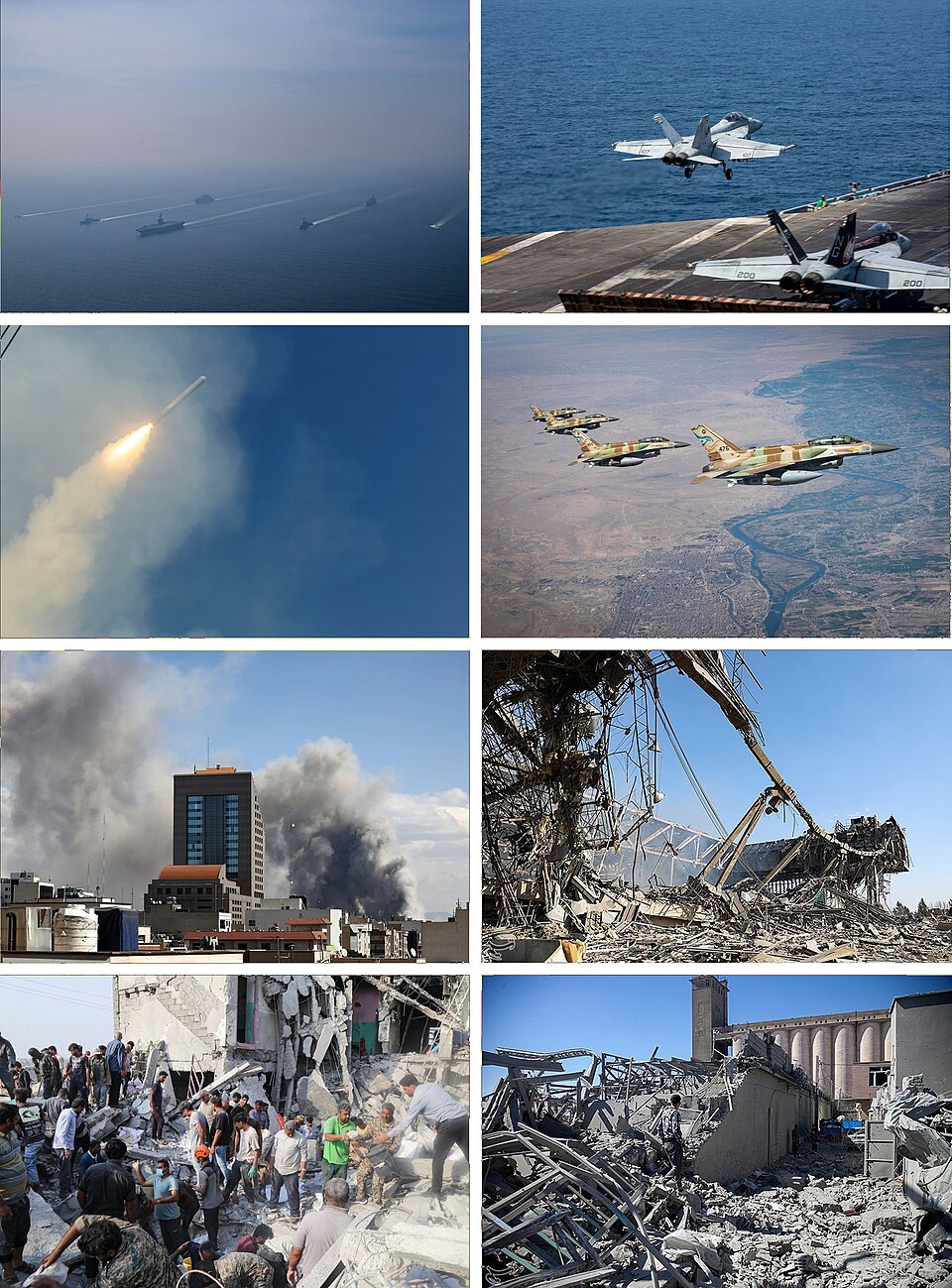
The April 2024 aerial assault on Israel was a meticulously planned, albeit ultimately unsuccessful, demonstration of Iran's long-range strike capabilities. A barrage estimated at 350 drones, rockets, and missiles was launched towards Iran's "archenemy." While the sheer volume of projectiles was undeniable, around 99 percent of them were intercepted by a sophisticated, multi-layered air defense system coordinated by Israel and a US-led coalition.
Despite the high interception rate, Iranian officials, including Shirazi, have framed the operation as a resounding success. Their justification isn't based on tactical damage inflicted, which was minimal, but on the perceived success of breaking a psychological barrier and demonstrating a willingness to strike directly at Israel from Iranian soil. For Tehran, it was a message – a declaration of intent and capability that, in their view, showcased their military prowess. This act, regardless of its immediate military outcome, has now been touted as a blueprint for future actions, raising concerns about the potential for an **iran war repeat** on a regional or even international scale.
Iran's Evolving Military Doctrine and Global Reach
Shirazi’s boasts extend beyond just the ability to strike Israel. He claims Iran has reached a stage where "major powers are extending their hands to us to meet their needs." While he abstained from specifying these powers, the implications are clear. Iran's provision of drones to Russia for its ongoing war against Ukraine, alongside reports of supplying ballistic missiles, highlights a significant evolution in its military doctrine and global influence.
Historically, Iran has engaged in costly, conventional conflicts, most notably the devastating Iran-Iraq War. However, its current strategy leans heavily into asymmetric warfare, leveraging technological advancements in drones and missiles, and cultivating a sophisticated network of regional proxies. This strategy allows Iran to project power and destabilize adversaries without direct military engagement, thereby minimizing the risk of a full-scale conventional war on its own soil.
This network of proxies is a cornerstone of Iran's regional strategy:
*
Yemen's Houthis: Actively blockading the Red Sea and attacking commercial shipping, ostensibly in solidarity with Hamas and to pressure Israel regarding the Gaza conflict.
*
Hezbollah in Lebanon: Iran's most formidable proxy, continuously engaging in cross-border attacks with Israel, further escalating tensions.
*
Proxies in Syria and Iraq: These groups have launched projectiles towards Israel and targeted US facilities and personnel in the region, particularly after the US affirmed Israel's right to self-defense following the October 7th attacks.
This reliance on proxies creates a layered buffer, enabling Iran to wage a "shadow war" – a concept explored further in
Iran's Shadow War: Proxies, Drones, and the Escalating Middle East. It complicates attribution, offers plausible deniability, and allows Iran to exert significant regional pressure without necessarily triggering a direct, conventional military response against its own territory.
Echoes of the Past: The Iran-Iraq War and "Conventional" Conflict
To understand Iran's current military posture, it's essential to look back at one of its defining conflicts: the Iran-Iraq War (1980-1988). This brutal, eight-year conflict, often sidelined in Western military history, was a war of staggering scale and horrific casualties, estimated between one and two million. It featured World War II-style armor, artillery, and infantry battles, punctuated by chemical weapons attacks, burning cities, and blazing oil tankers.
Western contractors working in Iraq at the time bore witness to nightly horrors – horizons scorched by artillery fire, followed by lines of civilian vehicles carrying the war-dead. This was a war fought primarily between nation-states using conventional military means: small arms, artillery, armor, combat aircraft, and warships, with the primary goal of destroying the opposing army's operational capability.
Some historians consider the Iran-Iraq War the "last conventional war in history," a bold claim given the conflicts that followed. This period stands in stark contrast to Iran's current approach, which prioritizes asymmetric tactics and proxy warfare. The immense human and economic cost of the Iran-Iraq War undoubtedly shaped Iran's strategic thinking, pushing it away from large-scale, direct conventional engagements. This shift makes the prospect of a traditional **iran war repeat** less likely, at least in the conventional sense, as detailed in
Iran-Iraq War: Is History's "Last Conventional War" Repeating?
Analyzing Iran's Current Capabilities and Intent
Iran's contemporary military strategy is a complex blend of deterrence, power projection, and regional influence, carefully calibrated to avoid a repeat of the devastating conventional wars of its past.
Strengths:
*
Extensive Drone and Missile Arsenal: Iran possesses a large and increasingly sophisticated inventory of drones and ballistic and cruise missiles, capable of reaching targets across the Middle East.
*
Sophisticated Proxy Network: Its well-established and battle-hardened proxies provide strategic depth and allow for indirect engagement.
*
Experience in Asymmetric Warfare: Decades of adapting to sanctions and regional challenges have honed its skills in unconventional tactics.
*
Strategic Depth: Its vast territory and mountainous terrain offer natural defensive advantages.
Weaknesses:
*
Limited Conventional Air Force: Iran's air force is largely aging and technologically inferior compared to regional rivals and Western powers.
*
Reliance on Proxies: While a strength, over-reliance can lead to loss of control and unpredictable escalation.
*
International Sanctions: Ongoing sanctions hinder its ability to acquire advanced military technology and maintain its existing equipment.
*
Potential for Disproportionate Retaliation: Any direct strike on Iran could invite a devastating response from a superior military coalition.
Intent:
Iran's intent seems to be to deter direct attack, project power, and enhance its regional influence through a combination of overt military displays (like the April attack) and covert proxy actions. It seeks to demonstrate its capability and resolve, but likely stops short of provoking a full-scale conventional conflict that it knows it cannot win against a technologically superior adversary. The April attack, while significant, was more a symbolic gesture of retaliation than an attempt to inflict decisive military damage.
The Geopolitical Chessboard: Risks and Ramifications
The prospect of an **iran war repeat**, whether through direct strikes or heightened proxy activity, carries immense risks. The incident in April clearly demonstrated the existence of a formidable US-led coalition ready to act in defense of its allies. Any future Iranian actions of similar magnitude would likely trigger an even more robust and potentially broader response.
The ramifications of such actions are manifold:
*
Escalation: The primary danger is miscalculation, where a perceived symbolic act crosses a threshold, leading to rapid and uncontrollable escalation into a wider regional conflict.
*
Global Economy: Increased tensions in the Middle East directly impact global oil markets and vital shipping lanes like the Red Sea, threatening economic stability worldwide.
*
Regional Stability: The fragile balance of power in the Middle East could be shattered, leading to prolonged instability, humanitarian crises, and further displacement.
*
Diplomatic Fallout: Further direct attacks would isolate Iran even more on the international stage, potentially solidifying alliances against it.
Shirazi's boast, therefore, can be viewed not just as a statement of capability, but also as a form of psychological warfare – a deterrent and a signal to both adversaries and allies about Iran's perceived strength and resolve.
Conclusion
Iran's military boasts reflect a unique strategic posture honed by decades of isolation and conflict. Its current doctrine prioritizes asymmetric capabilities, leveraging drones, missiles, and an extensive network of proxies to project power and pursue its regional objectives. While the April 2024 attack on Israel demonstrated a capacity for significant, if intercepted, strikes, it also highlighted the robust defenses of its adversaries. The true question isn't merely *if* Iran *can* initiate an **iran war repeat**, but *how* it chooses to, and at what cost. The lessons learned from the devastating Iran-Iraq War appear to have steered Iran away from direct, large-scale conventional conflicts, favoring a more ambiguous and calculated approach to engagement. However, in an already volatile region, even calculated risks carry the potential for unforeseen and catastrophic escalation.